
Last updated September 23, 2026
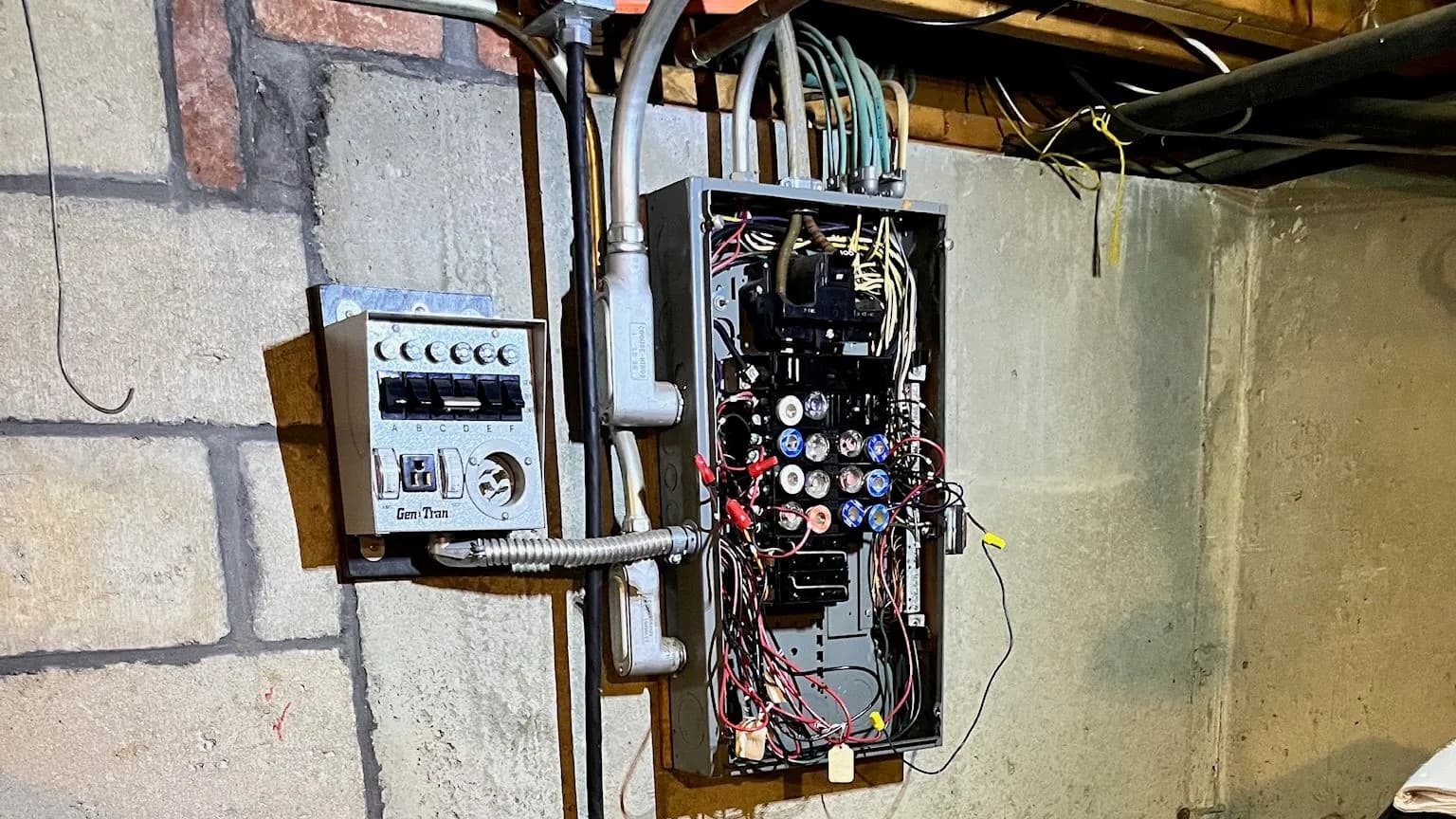
If you still have a fuse box, a 60 or 100-amp service feeding a growing home, breakers that trip often, a warm or buzzing panel, or no open slots for a new circuit, your electrical panel is worth pricing for an upgrade. Any one of these on its own is a reason to have it looked at. Several together usually means it is time. Lembo Electric, licensed in New Hampshire and Massachusetts, will tell you honestly where your panel stands, and the estimate is free.
1. Do I still have a fuse box or an undersized service?
Fuses did their job for decades, but a fuse box is a sign the service is old enough that the rest of it deserves a look. So is a 60 or 100-amp service in a home that keeps adding load. Modern breaker panels are safer and easier to live with, and a 200-amp service is the capacity most of what homeowners add today expects. If your panel predates central air, a heat pump, or an EV, it was sized for a different house than the one you live in now.
There is a practical wrinkle with fuse boxes too. When a fuse blows, the temptation is to reach for a bigger fuse so it stops happening, but that defeats the whole point of the fuse and lets the wire behind the wall run hotter than it was ever meant to. If you find yourself buying larger fuses to keep the lights on, that is not a fix, it is a warning, and it is a good moment to have the service evaluated.
2. Why do my lights dim or flicker under load?
When the lights dip as the air conditioner, the microwave, or the well pump kicks on, the panel is straining to keep up. Occasional flicker on one fixture can be a minor local issue. A pattern of it, especially across the whole house, points at a service that is at its limit, or at a loose or aging connection in the panel that is worth finding before it gets worse.
Flicker is worth taking seriously because some of its causes are harmless and some are not, and they look alike from the couch. A dimming light when the dryer starts may just be a heavily loaded circuit. The same symptom can also come from a loose neutral or a failing connection, which is a genuine hazard because it creates heat. We can tell the difference with a look and a few measurements, so you are not guessing about which kind you have.
3. Is a warm, buzzing, or scorched panel dangerous?
Yes, and it is a stop-and-call sign. A panel should be quiet and cool to the touch. Warmth, a buzz, a burning smell, or any scorch mark around the breakers means heat where there should be none, and heat in a panel is how electrical fires start. The Electrical Safety Foundation International attributes tens of thousands of home fires a year to electrical failures and malfunctions, and a hot panel is exactly the kind of warning that should not wait.
If you notice any of those signs, turn off what you safely can and call a licensed electrician rather than opening the panel yourself. The inside of a service panel carries lethal voltage even when the main breaker is off, because the line side ahead of the main is always live. This is one of those situations where the safe and the smart move are the same: leave it closed and get a pro out to it.
4. Am I adding real load the panel was never sized for?
An EV charger, a standby generator, a hot tub, a heat pump, or a finished basement all pull serious power. An EV charger alone is a continuous load the code sizes at 125 percent of its rating, so a single 48-amp charger is figured as a 60-amp load, and it can eat a big slice of a small service. Getting the panel and circuits right up front saves paying to redo it when the next project arrives.
The honest way to find out whether your service can carry what you are planning is a load calculation, the same method the National Electrical Code lays out in Article 220. It adds up your existing load and compares it against the size of your service, and whatever is left is the room you have. We run that math on your actual home before recommending anything, so an upgrade is a decision based on numbers, not a sales pitch.
5. Is my panel a known problem brand?
Certain older panel brands are widely flagged in the trade as failure-prone, with breakers that can fail to trip on an overload the way they should. A breaker that does not trip is the one safety device in the circuit not doing its job, which is why these panels are worth replacing on their own merits even when nothing looks wrong. If we see one during a visit, we will tell you straight what it is and why it matters, without the scare tactics and without pressure.
You will find these panels in plenty of homes across Rockingham County and the Merrimack Valley that were built or updated in the 1960s, 70s, and early 80s, so it is a common thing to run into, not a rare one. The point is not to panic if you have one, it is to know what you have and to plan the replacement rather than to keep trusting a breaker that may not protect the circuit. We can identify the brand at a glance and tell you whether yours is one of the ones with a real track record of trouble.
What size service do I actually need?
For most single-family homes in Southern NH and the Merrimack Valley, 200 amps is the practical standard for a home that will add modern electric loads, while a modest home with gas heat and no big electrical projects planned may be perfectly served by a healthy 100-amp service. Very large homes, or homes going all-electric with a heat pump, an EV or two, and electric cooking and water heating, sometimes justify more. The answer comes from the load calculation, not from square footage alone, and we size it so you are neither cramped now nor paying for capacity you will never use.
How disruptive is a panel upgrade, and how long does it take?
A straightforward panel or service upgrade is often a one-day job, and the power is off for part of that day while the work is done and the utility reconnects. We coordinate the disconnect and reconnect with Eversource or Unitil, handle the permit, and meet the inspector, so the moving parts line up. We will give you the real timeline with the estimate, including whether your power will be out for a few hours or most of the day, so you can plan around it rather than be surprised by it.
The finished work should also look as clean as it functions. A properly done upgrade leaves you with clearly labeled circuits, neat wiring inside the panel, the required surge protection and arc-fault or ground-fault devices in place, and a panel with room to grow. That labeling alone is worth a lot the first time you need to kill a specific circuit, and it is the kind of detail that separates a rushed swap from work you can trust for the next thirty years.
How long does an electrical panel last?
A quality panel can serve well for several decades, but age alone is not the deciding factor, condition and capacity are. A thirty-year-old panel that is cool, quiet, and has room to spare may be fine, while a newer panel that is full or shows heat is not. The honest way to know is to have it looked at rather than to replace on a birthday. We tell you where yours actually stands, whether you are in Derry, Salem, or across the line in Haverhill.
Does every old panel need replacing?
No, and that is the honest part. A healthy 100-amp panel with room to spare may be fine for years. We only recommend an upgrade when your home's load or your panel's condition genuinely calls for it. If it can wait, we tell you it can wait, and we tell you what to watch for so you know when that changes.
Have a question this did not cover? Call or text us at (603) 401-7359 and we will give you a straight answer.
Sources
- ENERGY STAR - Make Your Home Electric Ready (panel capacity)
- U.S. Department of Energy (BSESC) - Home Electrification and Electric Panel Upgrades
- ESFI - Home Electrical Fires (annual fire, injury, and property-loss figures)
- NFPA - Understanding the National Electrical Code (Article 220 load calc, busbar rules)
- NH OPLC - Electricians' Board (verify a New Hampshire license)