
Last updated September 27, 2026
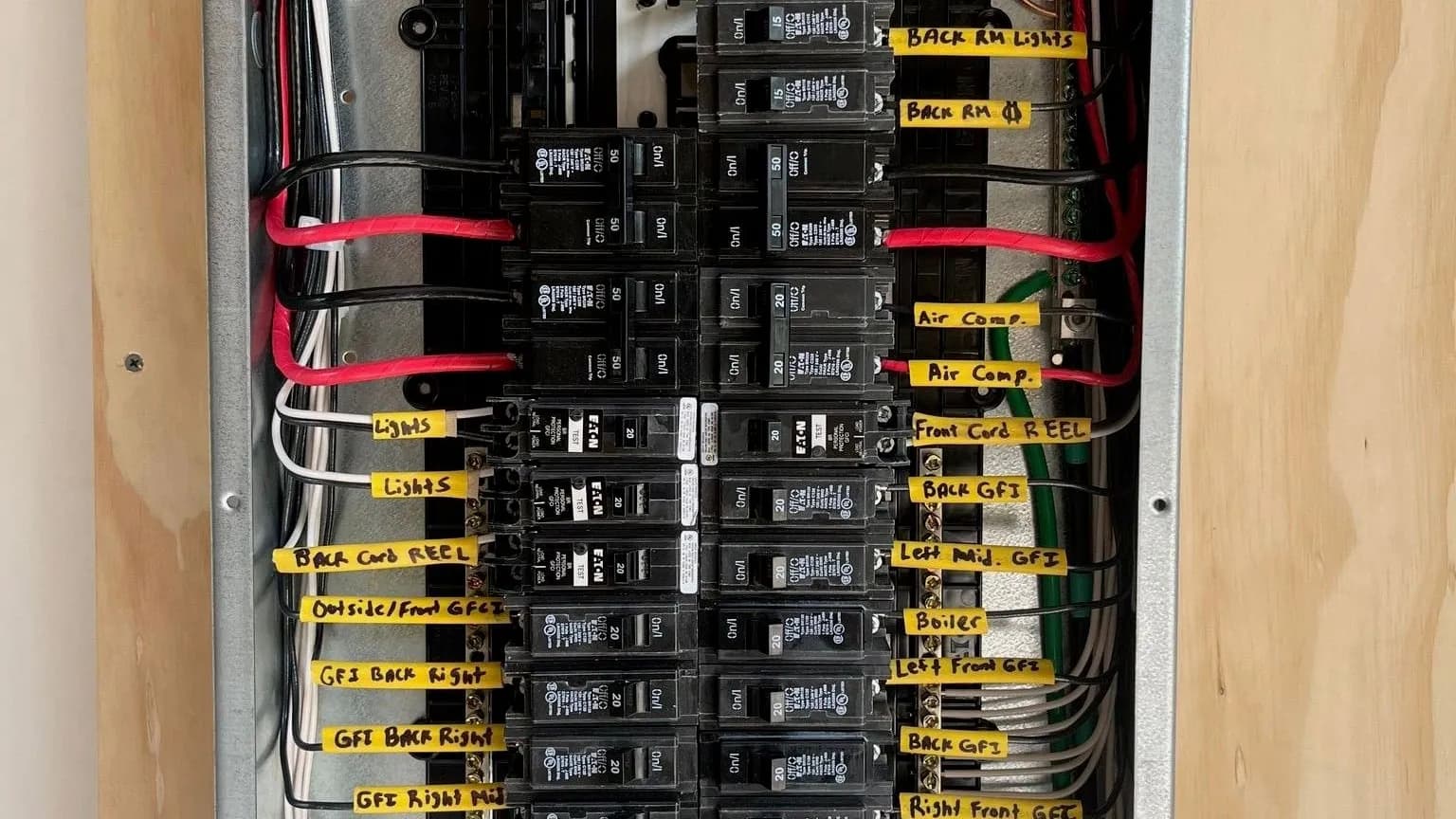
Yes, on new and replaced services. Since the 2020 National Electrical Code, a surge protective device has been required on the service of a dwelling, so if you are building, upgrading your panel, or replacing your service in New Hampshire or Massachusetts, one belongs in the job. That device is a whole-home surge protector: wired into your main electrical panel, it clamps down dangerous voltage spikes before they reach the wiring, outlets, and hardwired equipment in your home. Lembo Electric, licensed in both states, installs a panel-mounted surge protective device as part of a service or panel upgrade, and we can add one to most existing panels on its own. The estimate is free.
If you are new to the idea, our primer, What Is a Whole-House Surge Protector? (linked below under Keep reading), covers the basics. This article focuses on the code requirement and on how panel-mounted and plug-in protection work together.
What is a power surge, and where does it come from?
A surge is a short burst of voltage above what your electronics are built to handle, and even a brief spike can cook the sensitive boards inside modern appliances. Some surges come from outside the house, from utility switching on the Eversource or Unitil grid or a nearby lightning event during one of our summer storms.
A lot of them start inside your own walls, from large motors like a well pump, an air conditioner, or a heat pump cycling on and off all day. Those small internal surges are the ones people never think about, and they wear electronics down over time rather than in one dramatic failure. It is easy to blame a dead television on bad luck, when the real cause was months of small spikes from equipment two rooms away. A whole-home device is aimed squarely at that quiet, cumulative damage.
What does whole-home surge protection actually protect?
A service-entrance or panel-mounted device protects your entire electrical system, including everything you cannot plug into a little power strip. That means the wiring in the walls, the outlets and switches, and the hardwired equipment like your furnace, heat pump, well pump, garage door opener, and range. In a modern home in Atkinson or Salem that runs a heat pump, an EV charger, and a kitchen full of electronics, that is a lot of value sitting behind one device, and much of it is the equipment that is most expensive and most disruptive to replace.
Think about what has a circuit board in it today that did not a generation ago: the furnace control, the range, the dishwasher, the washer and dryer, the garage door opener, the smart thermostat, and the HVAC system. None of those can be protected by a plug-in strip because they are hardwired or built in. The panel device is the only practical way to put a first line of defense in front of all of them at once.
Does New Hampshire code require a surge protector?
Yes, on new and replaced services. The National Electrical Code added Section 230.67 in the 2020 edition, requiring a Type 1 or Type 2 surge protective device on the service supplying a dwelling, installed as part of the service equipment or right next to it. The 2023 edition kept that requirement and widened where it applies, adding places like dormitories and certain guest and care-facility sleeping areas.
New Hampshire follows the NEC as adopted by the state, and Massachusetts adopts the 2023 NEC as the Massachusetts Electrical Code, 527 CMR 12, so the requirement holds on both sides of the border. The practical takeaway is simple: if we upgrade your panel or your service, code now expects a surge device in that work, and we install it to that standard. It is no longer an optional add-on that gets skipped to shave a few dollars off a quote, it is part of a properly done service.
What is the difference between panel-mounted and point-of-use protection?
They work as a team, and the best setup uses both. A panel-mounted device, what the code calls a Type 1 or Type 2 surge protective device, sits at or inside your main panel and takes the big hit for the whole house. A point-of-use protector, a Type 3 device, is the strip or wall unit you plug a computer or a television into for a second layer of defense right at the equipment. The panel device handles the large surges the plug-in strip never could, and the plug-in adds close-in protection for your most sensitive gear. The Electrical Safety Foundation International recommends exactly this layered approach rather than relying on power strips alone.
Will a surge protector stop a direct lightning strike?
No, and any honest electrician will tell you that. No surge device on the market can absorb a direct lightning strike to the home. What a whole-home device does very well is handle the far more common surges, the utility blips and the internal motor surges, that quietly damage electronics year after year. If a severe storm is rolling through Rockingham County and you are worried, the surest protection for a specific device is still to unplug it. For everything you cannot unplug, the panel device is your guard.
It helps to think of surge protection in terms of the surges you will actually see. Direct strikes are rare and catastrophic, and a lightning protection system is a different discipline entirely. The everyday surges, from the utility switching loads on the grid and from your own well pump and air conditioner cycling, are constant and cumulative, and those are the ones a whole-home device is built to blunt. Sizing your protection to the real, common threat rather than the rare, dramatic one is the honest way to spend the money.
How long does a surge protector last?
A surge protective device is a sacrificial part by design: it absorbs spikes over time, and eventually its protective components wear out. A quality panel-mounted device can last many years and many surges, and good units include a status light or indicator that shows whether the protection is still active, so you are not guessing. Point-of-use strips wear out too, often sooner, which is why the good ones also have an indicator. The honest advice is to glance at the indicator now and then, and to have the panel device checked during any other electrical work, so you know your protection is still doing its job rather than assuming it is.
Is a power strip the same thing as surge protection?
Not always. A basic power strip is just extra outlets with an on-off switch and gives you no surge protection at all. Even a real point-of-use surge protector wears out, because it sacrifices itself absorbing spikes over time, so the good ones have an indicator light that tells you when they need replacing. A panel-mounted device covers the whole home in one place and does not depend on you remembering which strips are still good or how old they are. It is the difference between protecting a few gadgets and protecting the house.
Does surge protection matter more with a generator, EV charger, or solar?
It matters more the more electronics your home depends on, and modern additions raise the stakes. A standby generator, an EV charger, a heat pump, and a solar system all bring their own sensitive controls and inverters, and a switching event or an internal surge that once would have killed a lamp can now damage a control board that is expensive to replace. Backup power in particular involves transfer switching that can create its own surges, which is one more reason a properly done panel with a surge device is the right foundation for the electrified home. When we install any of that equipment, we look at whether your surge protection is in place and current, because protecting the new investment is part of doing the job right.
How do I add whole-home surge protection to my house?
We look at your panel, confirm there is room and a proper way to land the device, and install a surge protective device sized for a residential service. If you are already planning a panel or service upgrade, folding it into that work is the tidy way to do it. If your panel is healthy and you just want the protection, it is usually a short, clean job on its own. Homeowners in Atkinson, Salem, Derry, and Windham, and across the line in Methuen, have had us add this exact protection. Ask for it when we come out for your free estimate.
Have a question this did not cover? Call or text us at (603) 401-7359 and we will give you a straight answer.
Sources
- NFPA - Understanding the National Electrical Code (NEC), Section 230.67 surge protection
- ESFI - Home Surge Protective Devices
- ESFI - Surge Protective Devices (Type 1, 2, 3)
- Massachusetts Electrical Code, 527 CMR 12.00 (2023 NEC adoption)
- NH OPLC - Electricians' Board (New Hampshire licensing and permits)