
Last updated September 27, 2026
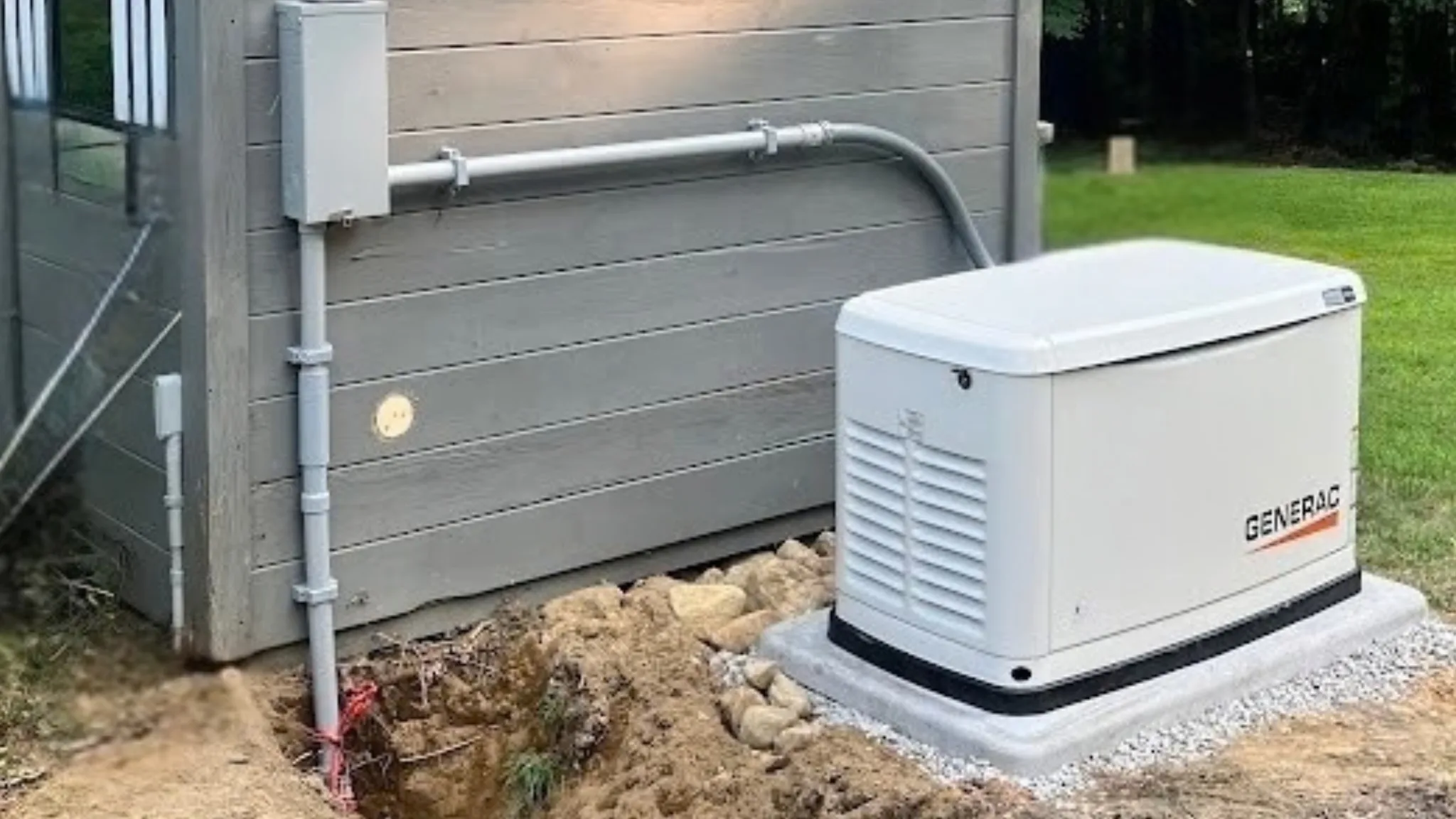
A good Generac installer does two things that decide whether your generator actually protects you: sizes the unit to the load your home really runs, and wires the transfer switch so backup power comes on safely and, in most homes, automatically. Lembo Electric installs Generac standby systems across Rockingham County and the Merrimack Valley. We set the concrete pad, make the electrical connection, install the transfer equipment, and pull the permit and handle the inspection that go with the job, with a licensed master electrician leading every install. The gas or propane hookup itself is made by your fuel supplier or a licensed gas fitter, and we coordinate the timing with them. In New Hampshire that work carries NH Master Electrician License number 13087, and in Massachusetts towns like Methuen and Haverhill it carries MA license 20906-EL-A. The estimate is free.
What does a certified Generac installer actually mean?
It means training on Generac equipment and standing behind the install, which matters for two practical reasons: the warranty and the setup. Generac's residential standby generators carry a 5-year limited warranty, and Generac requires warranty service to be performed by an authorized service dealer unless it approves otherwise in writing. When your generator is installed and serviced by someone Generac recognizes, and the automatic transfer switch is bundled and covered under that same warranty, you are not left arguing about coverage years down the road. Just as important, a trained installer sets the transfer switch and controls up the way the unit expects, so the system behaves the way it is supposed to the first time the grid drops.
The generator itself is only one part of the job. The pad it sits on, the electrical work, the transfer equipment, the load management, the permit, and the inspection are the rest, along with the gas or propane hookup that your fuel supplier or a licensed gas fitter makes. That is where a proper installer earns their keep. A unit dropped in without the right circuit or a correctly wired transfer switch is not backup power, it is an expensive box in the side yard.
Why does the transfer switch matter so much?
The transfer switch is the safety heart of the system, and the National Electrical Code treats it that way. Under NEC Article 702, which covers optional standby systems like a home generator, transfer equipment is required so that the utility and the generator can never feed the wires at the same time. That rule exists to protect the line crews working to restore power: without it, a generator could push voltage back onto the utility line and injure or kill someone. A permanently installed Generac standby unit pairs with an automatic transfer switch that watches utility power around the clock, starts the generator when the grid fails, moves your home onto backup power on its own, usually within seconds, and blocks any backfeed. When utility power returns, it hands the house back and shuts the generator down.
How is a standby generator sized for my home?
By what you want to keep running, figured with a real load calculation rather than a guess. A whole-home unit carries the entire house, including central air and the big kitchen loads. A more modest system, paired with a managed transfer switch, keeps the essentials on: the heat, the well pump, the refrigerator, the sump pump, and a handful of circuits that matter in a storm. Generac's own sizing guidance walks through both approaches and points homeowners to a professional load analysis, because the generator has to cover not just the running wattage but the surge a motor pulls the instant it starts. We walk your home, ask what you cannot do without when the power drops, factor in the startup surge on your well pump or heat pump, and size from that instead of selling you the biggest unit on the shelf.
Do I really need a standby generator for a Southern NH winter?
If a multi-day outage would mean frozen pipes, a flooded basement from a dead sump pump, or a house you cannot heat, backup power is worth pricing. This part of New England earns its reputation every year. Nor'easters and ice storms roll through Rockingham County and down into the Merrimack Valley, and the 2008 ice storm left parts of Southern NH dark for over a week. In Atkinson, Hampstead, and Sandown, where many homes run on a private well, an outage does not just take the lights, it takes your water and, in winter, your heat. We will tell you honestly whether a standby unit fits your home or whether a well-installed portable setup covers what you actually need.
Does New Hampshire require a permit for a generator install?
Yes, and the inspection that goes with it is a feature, not a hassle. New Hampshire has adopted the 2023 National Electrical Code with state amendments, and a standby generator install involves permitted electrical work that gets inspected by the local wiring inspector or, in towns without one, through the state, plus the gas work that your fuel supplier or a licensed gas fitter permits and completes. Massachusetts runs its own version of this: electrical work there falls under 527 CMR 12.00, the Massachusetts Electrical Code, and permits are filed with the local Inspector of Wires. Because we are licensed in both states, a Methuen or Haverhill job is pulled and inspected under Massachusetts rules and an Atkinson or Derry job under New Hampshire rules, with the correct license on each. That is the difference between a generator that is on the record and one that becomes a problem when you sell the house.
What fuel does a standby generator run on?
Almost always natural gas or propane, and which one you have shapes the install. If your home already has a natural gas line, like many do in the more developed parts of Salem and Derry, the generator runs off that supply and never needs refueling, which is a real advantage in a long outage. If you are on propane, common in more rural spots around Sandown, Kingston, and Chester, the generator runs off a tank that has to be large enough to carry the load for the length of a realistic outage, and we factor the tank size and the fuel-delivery rate into the plan. The pipe and regulator, which your gas supplier or a licensed gas fitter installs, have to deliver enough fuel volume at full load, so the gas side gets sized right alongside the electrical plan. Before we set the unit, we confirm you have a gas or propane supply that can serve it, so it does not starve and stall when you need it.
How often does a standby generator need maintenance?
Less than you would think, but not zero. A standby unit runs a brief self-test on a schedule, usually weekly, so it exercises the engine and confirms it is ready, and you should hear it cycle. Beyond that, it needs periodic service: an oil and filter change, a look at the battery, the air filter, and the spark plugs, on an interval set by run hours or roughly once a year for a home that has not seen heavy outage use. Battery health is the single most common reason a standby unit fails to start when called, so it is worth keeping on top of. We can set up a maintenance visit or walk you through what to check yourself, and we service units on a schedule so yours starts the day the grid goes down.
What size do home standby generators come in?
Air-cooled home standby units, the type most homes in Southern NH and the Merrimack Valley use, commonly run from about 10 kW up through the mid-20s in kilowatts, with larger liquid-cooled units available for big or all-electric homes. The size you choose comes out of the load calculation, not the shelf. A modest essential-circuits home might land near the bottom of that range, while a large home that wants whole-house comfort with central air lands near the top. We match the unit to your actual load and your fuel supply, so you are not paying for capacity you will never use or, worse, buying a unit too small to carry the surge when the well pump and the furnace start together.
Can you service or fix a generator you did not install?
Often, yes. We are glad to look at a unit another company put in, tell you straight what shape it is in, and handle maintenance or repairs. Keep in mind that Generac's warranty service generally has to run through an authorized dealer, so on a newer unit it is worth knowing who installed it before major warranty work. On an older or out-of-warranty generator, we can service the transfer switch, the battery, and the connections, and get it running reliably again.
How do I get started?
Start with a walk-through and a free estimate. We look at your service, your fuel options, and what you want to keep running, and give you a written quote for our side of the job: the pad, the electrical connection, the transfer switch, the permit, and the inspection. The gas or propane hookup is made by your fuel supplier or a licensed gas fitter, and we coordinate the timing with them. Whether you are in Windham, Kingston, or across the line in Andover, Massachusetts, you get an honest size and a clean install. Honesty and Quality above all else is how the quote gets written.
Have a question this did not cover? Call or text us at (603) 401-7359 and we will give you a straight answer.
Sources
- Generac - What Size Generator Do I Need? (sizing, transfer switch, load management)
- Generac - What Does My Home Standby Generator Warranty Cover?
- Generac - 5-Year Limited Warranty, Residential/Commercial Standby Generators (PDF)
- NFPA - Understanding the National Electrical Code (Article 702, optional standby / transfer equipment)
- U.S. CPSC - Portable Generator-Related Carbon Monoxide Deaths
- NH Division of Fire Safety - Fire Codes Adopted for NH (NEC 2023)
- Mass.gov - 527 CMR 12.00 Massachusetts Electrical Code (amendments)
- Consumer Reports - Portable vs. Standby Generator