
Last updated September 23, 2026
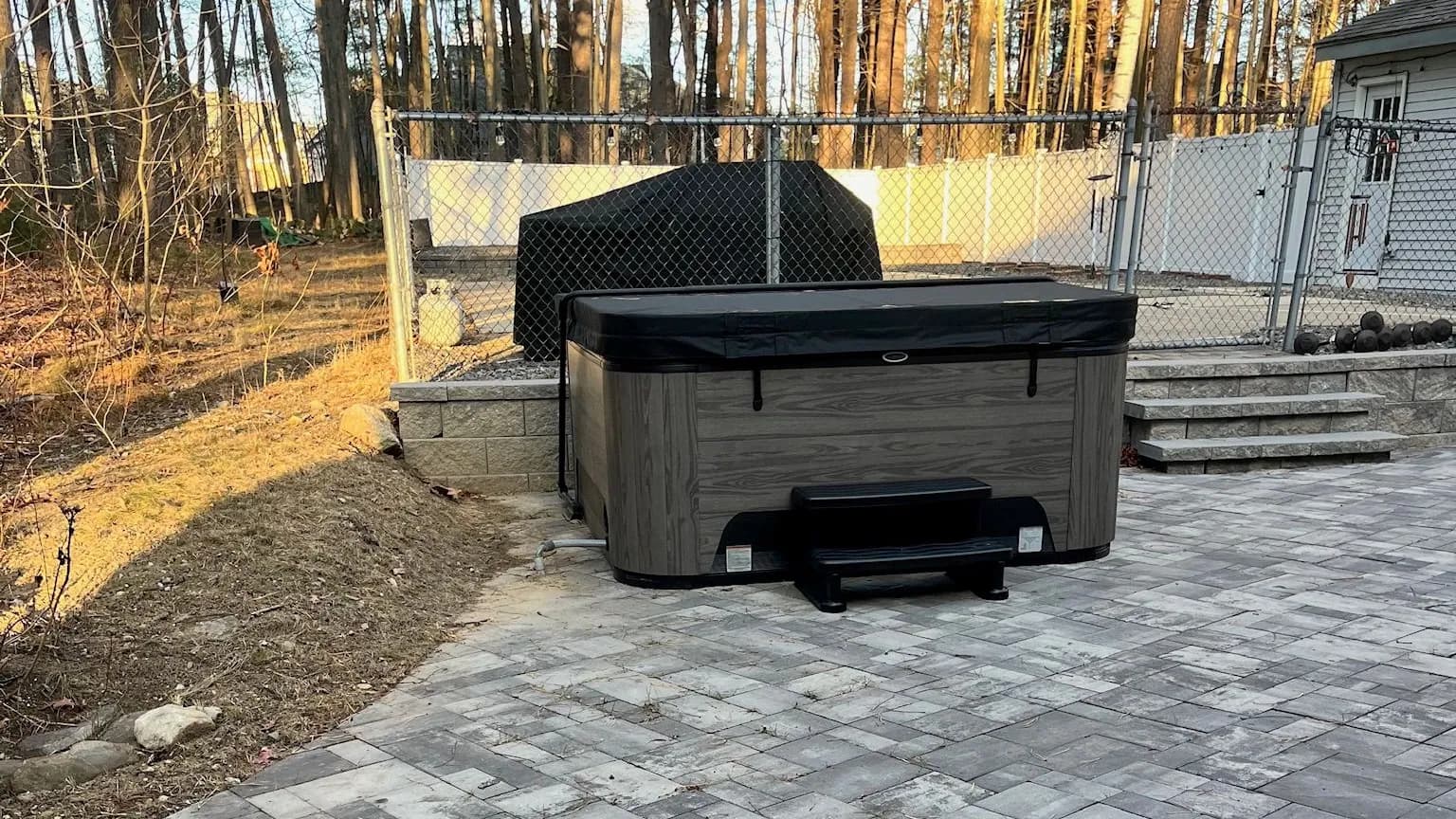
A hot tub needs its own GFCI-protected 240-volt circuit and a disconnect that is within sight of the tub, readily accessible, and at least five feet from the water. That disconnect lets anyone cut power fast, and the ground-fault protection guards against shock in the one place electricity and water meet on purpose. Under NEC Article 680, the rules that cover spas and hot tubs, the metal around the tub also has to be bonded together so no dangerous voltage can build up between the parts you touch. We wire the circuit, set the disconnect in the right spot, bond everything correctly, and pull the permit so your soak is safe and passes inspection. Whether you are in Atkinson, Windham, or across the line in Methuen, the estimate is free.
Why does a hot tub need its own dedicated circuit?
Because a hot tub pulls a steady, heavy load for its heater and pumps, and it pulls it for hours at a time. That is exactly the kind of load the electrical code wants on a dedicated circuit that feeds nothing else. Sharing the line with garage outlets or exterior lighting would overload it and leave you resetting breakers every time the heater and a pump run together. Most spas run on a dedicated 240-volt circuit, and the exact breaker and wire size come straight off the tub's own data plate and the manufacturer's instructions, not a rule of thumb. A very common setup is a 50-amp GFCI-protected circuit, but yours may be 40 or 60 amps depending on the model, which is why we read your specific tub rather than assuming. Matching the wire gauge and breaker to the tub is what keeps the heater and pumps running reliably for years instead of nuisance-tripping through the first cold snap. It also protects the tub itself, because an undersized circuit that runs hot is hard on the heater and the control board, the two most expensive parts to replace.
What is the five-foot disconnect rule for a hot tub?
NEC Article 680 requires a maintenance disconnecting means that is readily accessible, within sight of the tub, and located at least five feet from the inside walls of the spa or hot tub, unless a permanent barrier gives you that same five-foot reach distance. Within sight, in code language, means you can actually see it and it is within fifty feet. The logic is simple and worth understanding: if a pump seizes or someone feels a tingle, anyone standing at the tub can reach a switch and kill the power without leaning across the water to do it. That single disconnect, mounted in the right place, is one of the most important safety details on the whole job, and it is one of the first things a New Hampshire or Massachusetts inspector looks for.
Why does GFCI protection matter so much around a hot tub?
Water and electricity together are the exact hazard ground-fault protection was invented for. A GFCI, a ground-fault circuit interrupter, constantly compares the current going out to the current coming back, and the instant it senses even a small amount leaking off its intended path, it shuts the circuit off in a fraction of a second, before that leak can become a shock through a person. Article 680 requires ground-fault protection for the spa's outlets, pumps, heater, and the equipment around the water. For a hot tub this is not an upgrade or an option, it is the safeguard that makes the entire installation safe to climb into. We install the GFCI protection as an integral part of the hookup, test it, and show you the test button so you know how to check it yourself.
What is bonding, and why does my hot tub need it?
Bonding ties all the metal parts in and around the tub together with a conductor, typically a solid #8 AWG copper wire, so every piece of metal sits at the same electrical potential. When everything is at the same potential there is no voltage difference between two things you might touch at once, and no voltage difference means no path for a shock. The code calls this equipotential bonding, and Article 680 requires it for spas and hot tubs. It covers the metal parts of the tub shell, the pump and heater housings, and metal within five feet of the water, such as a railing or a ladder. Bonding is separate from grounding, and it is one of those steps that is invisible when it is done right and genuinely dangerous when it is skipped. We bond the tub correctly as part of every hookup so the installation is safe and passes inspection the first time.
Do I need a permit and inspection for a hot tub in New Hampshire?
In almost every case, yes, and that is a good thing for you, not a hurdle. A hot tub circuit is new electrical work, and both New Hampshire and Massachusetts expect a licensed electrician to pull an electrical permit and have the work inspected. The permit puts the installation on record and the inspection is a second set of trained eyes confirming the disconnect distance, the GFCI protection, and the bonding are all correct. When you hire a licensed master electrician, the permit and inspection are handled for you rather than left as your problem. We take care of the paperwork and meet the inspector, so the finished job is documented and code-compliant, which also matters later if you ever sell the home and a buyer's inspector asks about that backyard spa.
What does a hot tub electrical hookup cost?
It depends on your panel, the distance from the panel to the pad, and whether the run crosses a finished basement or open ground. National cost guides give a wide range as a starting point: home-improvement resources like Angi and HomeGuide put a straightforward new hot tub circuit and disconnect around eight hundred to sixteen hundred dollars, and a longer, code-compliant install with trenching for an outdoor run higher, often in the low thousands. Those are national figures to set expectations, not a quote for your home, and if your panel is full and needs a service upgrade first that is a separate conversation. Rather than guess, we come out, look at your actual panel and the route to the tub, and give you a clear written estimate. There is never a fabricated number, just an honest price for the real work.
Where does the wiring run, and how do you avoid nuisance tripping?
The circuit runs from your main panel to the disconnect near the tub, and then a short protected run from the disconnect into the tub's control box. How that path travels is what varies from home to home. Sometimes it is a clean run through a basement and up an exterior wall, and sometimes it means an underground run in conduit across the yard to a pad, which has to be buried at the proper depth and protected where it comes out of the ground. The wire size matters here too, because a long run can call for a heavier gauge to keep voltage steady over the distance. Nuisance tripping, where the GFCI keeps shutting off for no obvious reason, usually traces back to a shortcut: an undersized wire, a shared neutral, moisture getting into a connection, or a tub that was really wired for a different amperage than the breaker installed. We size the run correctly and land every connection weather-tight, which is what keeps the GFCI protecting you instead of tripping on you in the middle of a soak.
Can you wire a hot tub that is already delivered and on the pad?
Yes. Whether your tub is still on the delivery truck or already sitting on its pad, the electrical work is the same job done in the same order: run the dedicated circuit, set the GFCI disconnect at the correct distance and within sight, bond all the metal, then get it inspected. Homeowners from Windham and Plaistow to Haverhill and Andover across the Massachusetts line have had us handle exactly this, on new spas and on tubs they bought used and moved. If you already have a soak tub waiting and no safe way to power it, that is precisely the call to make. Honesty and Quality above all else means the hookup is done right, to the code of the state you live in, so the only thing left to think about is how warm to set the water.
Have a question this did not cover? Call or text us at (603) 401-7359 and we will give you a straight answer.
Sources
- NFPA - Understanding the National Electrical Code, Article 680 (pools, spas, hot tubs)
- Electrical Contractor Magazine - Disconnect for Hot Tubs (within sight, 5-foot rule)
- EC&M - Pools and Spas: disconnect and GFCI requirements
- ESFI - Ground Fault Circuit Interrupters (GFCI)
- Angi - 2026 Hot Tub Electrical Installation Cost Guide (national ranges)
- HomeGuide - How Much Does It Cost to Install a Hot Tub? (2026)
- NH OPLC - Electricians' Board (permit and licensing authority)